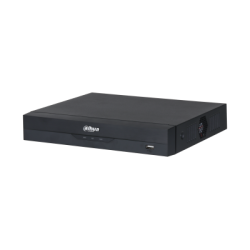
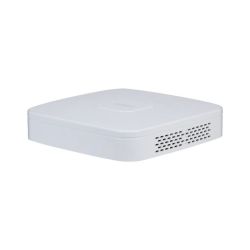
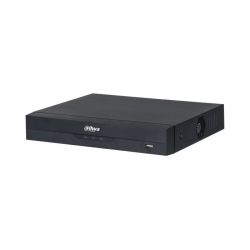
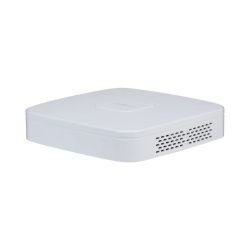
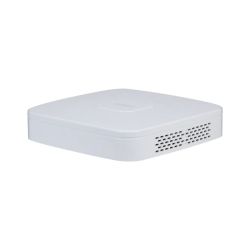
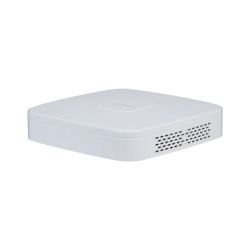
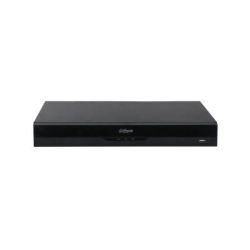
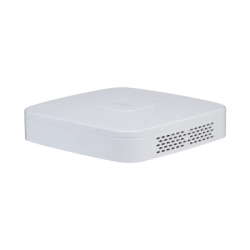
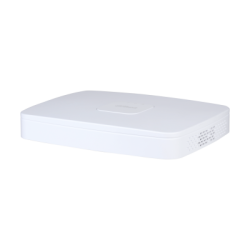
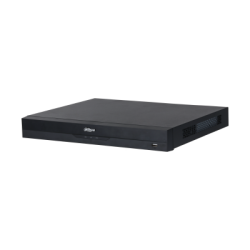
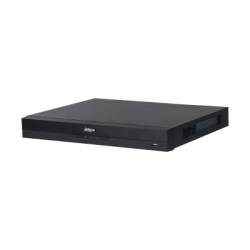
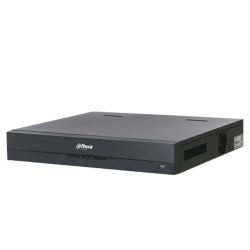
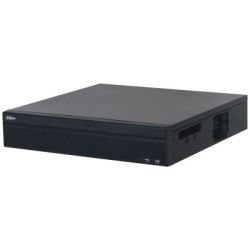
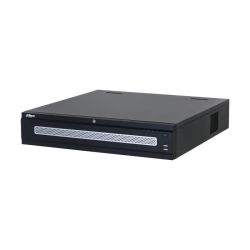
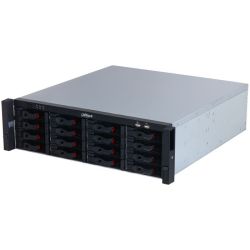
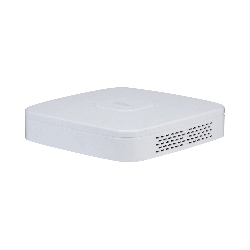
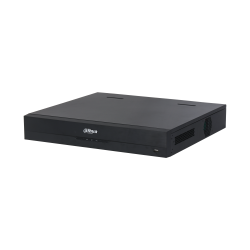
The heart of an IP CCTV system.
An NVR (network video recorder) powers your IP cameras over PoE, records them to a hard drive, and sends live view and playback to your phone through the Hik-Connect app. We stock HiLook by Hikvision, Hikvision and Dahua NVRs, from 4 channels up to 256.
Shop by size: 4 channel (homes and small shops) · 8 channel (the most common size) · 16 channel (commercial units, schools, farms) · 32 channel (industrial sites, retail parks) · 64 channel (campuses and estates)
How do I choose an NVR?
- Channels: buy for the cameras you'll have in two years, not today.
- PoE ports: built-in PoE powers the cameras directly, with no separate switch. Non-PoE NVRs cost less but need a PoE switch. On 32-channel models, PoE often covers only half the channels.
- Maximum resolution: check what the recorder accepts. Current AcuSense models take up to 32MP. Older and entry models stop at 12MP or 4MP and scale anything higher down.
- Drive bays: one bay suits most homes and shops. Two bays double how long you keep footage on busier sites. Four or more where a licence sets the period.
- Bandwidth: divide the incoming figure by the channel count. About 3 Mbps per camera suits 2MP. 6–8 Mbps is comfortable for 4MP and above.
Where can I learn more?
The Hikvision range has nine series and a dozen suffixes, and the model number doesn't make the differences clear. Our Hikvision NVR buying guide explains every series, works through PoE and bandwidth, covers RAID, and explains the (C) vs (E) revision trap: the same model number with half the camera resolution and half the storage limit.
Which cameras go with it?
An NVR records Hikvision IP cameras over one network cable that carries power and picture. The Hikvision IP camera buying guide covers series, lenses and pixels per metre.
- AcuSearch and AcuSeek only work with AcuSense cameras. A smart recorder with the wrong cameras has nothing to work with.
- Check whether your cameras need 802.3af or 802.3at power. Strobe and siren models use two to three times as much as plain ones.
- Dual-lens cameras take two channels each.
Send us your camera list and we'll confirm it fits. Recording HD-TVI cameras over coax instead? You need a DVR and HD analogue cameras.
What about the hard drive?
HiLook and Hikvision NVRs are plug-and-play with their own cameras and accept ONVIF cameras from other brands. Add a WD Purple or Toshiba S300 surveillance drive from the options on each product, and we'll fit and format it before dispatch. See how many days each size records on our CCTV hard drives page, or use the CCTV storage calculator.
Not sure which NVR fits? Call us on 01902 902251. We deliver to England, Scotland and Wales within 1–2 working days.
Network Video Recorders (NVRs)
The heart of an IP CCTV system.
An NVR (network video recorder) powers your IP cameras over PoE, records them to a hard drive, and sends live view and playback to your phone through the Hik-Connect app. We stock HiLook by Hikvision, Hikvision and Dahua NVRs, from 4 channels up to 256.
Shop by size: 4 channel (homes and small shops) · 8 channel (the most common size) · 16 channel (commercial units, schools, farms) · 32 channel (industrial sites, retail parks) · 64 channel (campuses and estates)
How do I choose an NVR?
- Channels: buy for the cameras you'll have in two years, not today.
- PoE ports: built-in PoE powers the cameras directly, with no separate switch. Non-PoE NVRs cost less but need a PoE switch. On 32-channel models, PoE often covers only half the channels.
- Maximum resolution: check what the recorder accepts. Current AcuSense models take up to 32MP. Older and entry models stop at 12MP or 4MP and scale anything higher down.
- Drive bays: one bay suits most homes and shops. Two bays double how long you keep footage on busier sites. Four or more where a licence sets the period.
- Bandwidth: divide the incoming figure by the channel count. About 3 Mbps per camera suits 2MP. 6–8 Mbps is comfortable for 4MP and above.
Where can I learn more?
The Hikvision range has nine series and a dozen suffixes, and the model number doesn't make the differences clear. Our Hikvision NVR buying guide explains every series, works through PoE and bandwidth, covers RAID, and explains the (C) vs (E) revision trap: the same model number with half the camera resolution and half the storage limit.
Which cameras go with it?
An NVR records Hikvision IP cameras over one network cable that carries power and picture. The Hikvision IP camera buying guide covers series, lenses and pixels per metre.
- AcuSearch and AcuSeek only work with AcuSense cameras. A smart recorder with the wrong cameras has nothing to work with.
- Check whether your cameras need 802.3af or 802.3at power. Strobe and siren models use two to three times as much as plain ones.
- Dual-lens cameras take two channels each.
Send us your camera list and we'll confirm it fits. Recording HD-TVI cameras over coax instead? You need a DVR and HD analogue cameras.
What about the hard drive?
HiLook and Hikvision NVRs are plug-and-play with their own cameras and accept ONVIF cameras from other brands. Add a WD Purple or Toshiba S300 surveillance drive from the options on each product, and we'll fit and format it before dispatch. See how many days each size records on our CCTV hard drives page, or use the CCTV storage calculator.
Not sure which NVR fits? Call us on 01902 902251. We deliver to England, Scotland and Wales within 1–2 working days.
- Dahua
- Dahua
- Dahua
- Dahua
- Dahua
- Dahua
- Dahua
- Dahua
- Dahua
- Dahua
- Dahua
- Dahua
- Dahua
- Dahua
- Dahua
- Dahua