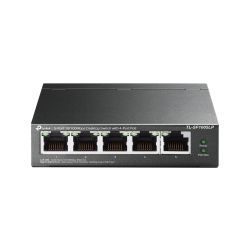
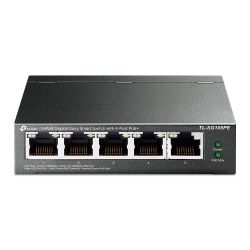
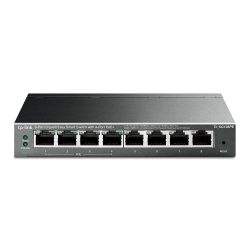
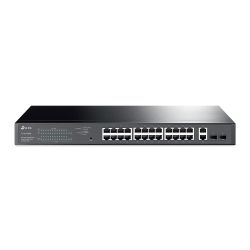
TP-Link PoE switches: power and data to every camera and access point.
A TP-Link PoE switch sends power and data down one network cable, so IP cameras, access points and phones need no separate power supply. This category brings together every TP-Link and Mercusys switch we stock with PoE output, from small desktop units to rack-mount Omada models. Zenith is an official TP-Link VAR Partner.
Sizing a switch for CCTV? Our TP-Link Omada buying guide walks through PoE budgets, switch tiers, access points and gateways.
How do I choose a TP-Link PoE switch?
Who are they for?
CCTV installers adding cameras beyond an NVR's built-in ports, offices and schools powering access points, and shops running cameras and tills from one cabinet.
The numbers that matter
- PoE budget vs camera count: add up the wattage of every device. The total PoE budget, not just the port count, decides how many you can run. Heated and PTZ cameras draw more.
- Ports: one per device, plus an uplink and spares.
- Unmanaged or Omada: unmanaged switches (TL-SF, TL-SG, TL-SL, LS and Mercusys) plug in and work. Omada switches come in two tiers: Omada Easy Managed (ES models) add VLANs, port monitoring and Omada cloud visibility at a lower price, while Omada Smart Managed (SG and SL models) add full L2+ features. Both can be managed centrally alongside Omada access points and gateways.
- Long runs: some models offer an extended-range mode for longer cable runs. Check the product page.
TP-Link PoE switch FAQs
Which TP-Link PoE switch for 8 cameras?
Choose a switch with at least 8 PoE ports plus an uplink, and a PoE budget above the combined draw of your cameras.
Do TP-Link PoE switches work with Hikvision cameras?
Yes. Standard PoE cameras power from a standard PoE switch within its port and budget limits.
Managed or unmanaged?
Unmanaged suits small systems. An Omada managed switch lets you see per-port power and restart a device remotely, useful on commercial sites.
What is the difference between PoE and PoE+?
PoE+ (802.3at) supplies more power per port than standard PoE (802.3af). Check your device's requirement and the switch's per-port rating.
How far can PoE run?
Standard Ethernet and PoE are rated to around 100m per run unless the switch has an extended mode.
See all PoE switches, access points or TP-Link. Questions? Call 01902 902251.
TP-Link PoE Switches
TP-Link PoE switches: power and data to every camera and access point.
A TP-Link PoE switch sends power and data down one network cable, so IP cameras, access points and phones need no separate power supply. This category brings together every TP-Link and Mercusys switch we stock with PoE output, from small desktop units to rack-mount Omada models. Zenith is an official TP-Link VAR Partner.
Sizing a switch for CCTV? Our TP-Link Omada buying guide walks through PoE budgets, switch tiers, access points and gateways.
How do I choose a TP-Link PoE switch?
Who are they for?
CCTV installers adding cameras beyond an NVR's built-in ports, offices and schools powering access points, and shops running cameras and tills from one cabinet.
The numbers that matter
- PoE budget vs camera count: add up the wattage of every device. The total PoE budget, not just the port count, decides how many you can run. Heated and PTZ cameras draw more.
- Ports: one per device, plus an uplink and spares.
- Unmanaged or Omada: unmanaged switches (TL-SF, TL-SG, TL-SL, LS and Mercusys) plug in and work. Omada switches come in two tiers: Omada Easy Managed (ES models) add VLANs, port monitoring and Omada cloud visibility at a lower price, while Omada Smart Managed (SG and SL models) add full L2+ features. Both can be managed centrally alongside Omada access points and gateways.
- Long runs: some models offer an extended-range mode for longer cable runs. Check the product page.
TP-Link PoE switch FAQs
Which TP-Link PoE switch for 8 cameras?
Choose a switch with at least 8 PoE ports plus an uplink, and a PoE budget above the combined draw of your cameras.
Do TP-Link PoE switches work with Hikvision cameras?
Yes. Standard PoE cameras power from a standard PoE switch within its port and budget limits.
Managed or unmanaged?
Unmanaged suits small systems. An Omada managed switch lets you see per-port power and restart a device remotely, useful on commercial sites.
What is the difference between PoE and PoE+?
PoE+ (802.3at) supplies more power per port than standard PoE (802.3af). Check your device's requirement and the switch's per-port rating.
How far can PoE run?
Standard Ethernet and PoE are rated to around 100m per run unless the switch has an extended mode.
See all PoE switches, access points or TP-Link. Questions? Call 01902 902251.